Dry Eye Care in Richmond Hill
Burning, gritty or uncomfortable eyes? Start with an assessment. Our optometrists consider your symptoms and eye health, then discuss care options suited to the findings.
Start with an Assessment
Dry eye can happen when there are not enough tears or when the tear film does not work as it should. Burning, scratchiness, redness and fluctuating vision can have several causes, so symptoms alone do not tell us which treatment you need.
Your optometrist asks about your symptoms, medications, contact lenses and previous care. The assessment may consider the surface of your eyes, tear film and eyelids, including the oil-producing meibomian glands. The findings guide the discussion about care.
Learn more about dry eye from the Canadian Association of Optometrists. Read the Canadian dry eye information.
LipiScan Gland Imaging
We use LipiScan as part of our dry eye assessments to capture images of the oil-producing meibomian glands in the eyelids. Your optometrist reviews these images alongside your symptoms and other examination findings when discussing your care.
A Plan Based on Your Findings
Your plan may involve changes to everyday habits, eyelid care, eye drops or an in-office procedure. Your optometrist can explain what is appropriate for you, how to use any recommended products and when to return for review.
Dry eye care may require ongoing management. Response varies, and an in-office treatment is not suitable for every patient. An assessment does not commit you to a course of treatment.
Understanding IPL and RF
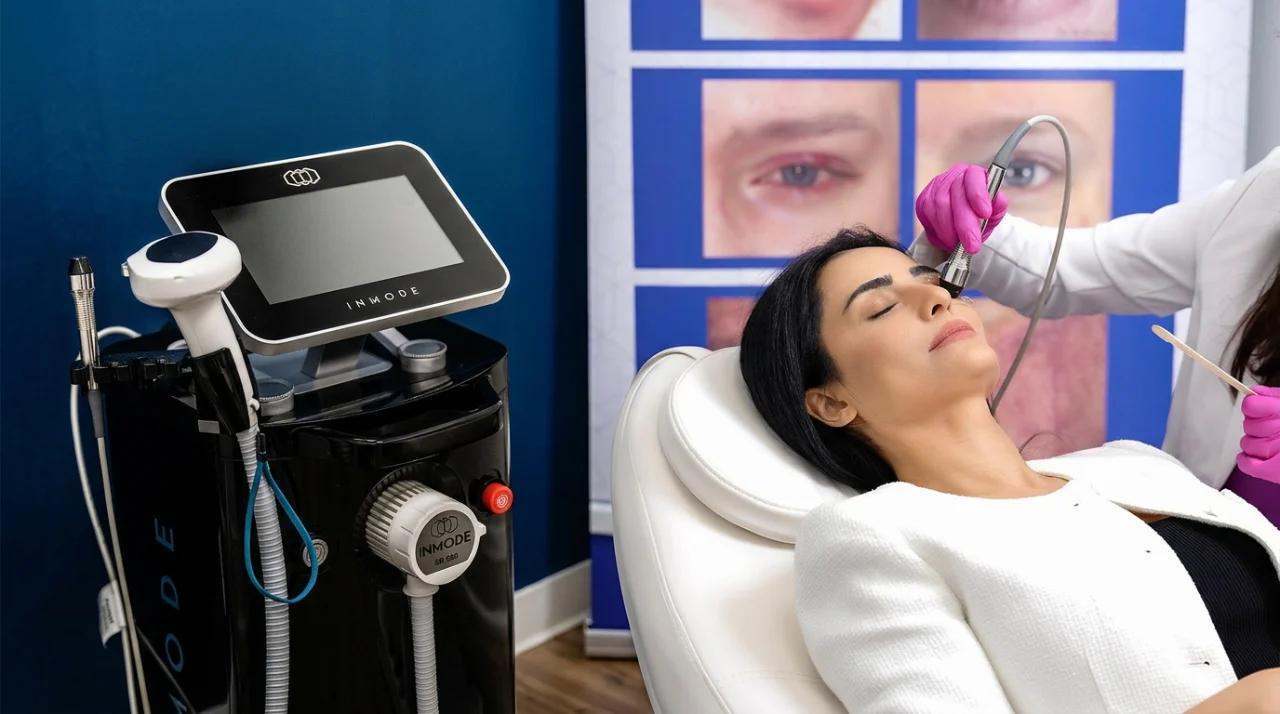
Our clinic uses InMode Lumecca-I and Forma-I. Your optometrist reviews the assessment findings and your medical history before discussing a procedure, its intended purpose and alternatives.
Lumecca-I intense pulsed light
Lumecca delivers pulses of light with the Lumecca-I adaptor. Ask your optometrist about the proposed treatment area and purpose, eye protection, suitability for your skin and medical history, and possible side effects.
Forma-I radiofrequency
Forma-I uses bipolar radiofrequency energy to provide controlled warmth in the treatment area. Ask your optometrist how the procedure would fit your care plan, what it involves and what benefits and limitations to expect.
The clinic can explain the device and protocol proposed for you, preparation, aftercare and any recommended course of visits. There is no single session count or outcome that applies to everyone.
Preparing for Your Dry Eye Visit
- Bring a list of eye drops, medications and previous treatments, including what helped or caused irritation.
- Note when symptoms happen and how they affect reading, screen use or contact lens wear.
- Tell us about relevant medical conditions, allergies and previous eye procedures.
- Ask whether you should change contact lens wear or eye makeup before your particular visit.
Contact the clinic to confirm your appointment length and instructions. Do not stop prescribed medication unless your prescribing clinician advises it.
Assessment Fees and Treatment Costs
Contact the clinic for a quote in Canadian dollars (CAD). Ask about the assessment fee, any uninsured testing, and the cost of a proposed treatment or follow-up visits before deciding.
OHIP coverage depends on your eligibility and the service provided. Eligible patients pay no fee for OHIP-insured services. For any recommended uninsured assessment, treatment or follow-up, the clinic will explain the purpose and cost so you can decide whether to proceed. Contact us and your insurer to check private coverage and direct-billing arrangements.
Questions About Your Visit
Should I book an eye exam or a dry eye assessment?
Will I have IPL or RF at my first visit?
Will I need follow-up visits?
What if my eyes suddenly become painful or my vision changes?
Ready to choose your appointment?
Open online booking to choose a service and an available time. If you are unsure which visit to select, call our clinic and we can help.